Call for Papers
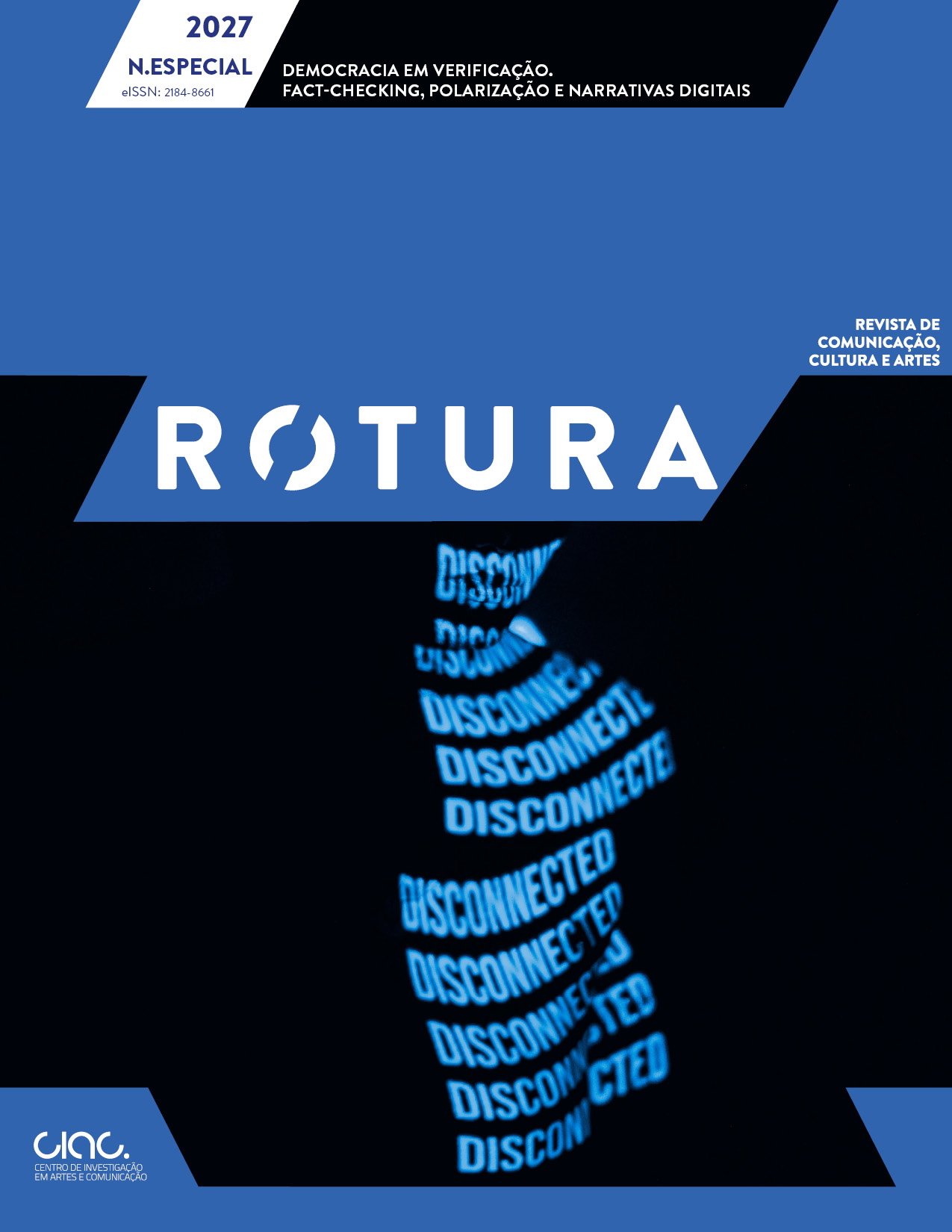
Special Issue: Democracy Under Verification: Fact-checking, Polarization and Digital Narratives
The accelerated dissemination of disinformation has made fact-checking a central journalistic practice and a widely advocated instrument for sustaining democratic life (Graves, 2016). However, its actual functioning, selection criteria, public reception, and impact on media and political agendas continue to generate academic and professional debate, particularly within a fragmented public sphere shaped by ideological polarization and the infrastructural power of digital platforms.
In this context, contemporary democracies face a dual challenge. The circulation of false, manipulated, or misleading narratives within the broader framework of information disorders (Wardle & Derakhshan, 2017) undermines trust in institutions, the media, and democratic processes. At the same time, audiences interpret information through the lens of political identities and prior beliefs, which may limit the capacity of factual corrections to change perceptions, attitudes, and behaviours.
The conference Democracy Under Verification: Fact-checking, Polarization and Digital Narratives aims to examine the role of fact-checking in responding to disinformation while critically reflecting on its limitations and effects in relation to digital platforms, artificial intelligence, media literacy, political communication, journalism, and public trust. Theoretical, empirical, methodological, and applied contributions are welcome.
Thematic Areas
- Fact-checking, Journalism and Democracy
- Fact-checking routines, practices, and selection criteria;
- Political fact-checking and election coverage;
- Journalism, public truth, and democratic accountability;
- Public attitudes towards fact-checking;
- Effects of corrections on false beliefs;
- Consumption, sharing, and rejection of verified content.
- Disinformation, Polarization and Political Communication
- Disinformation in electoral contexts;
- Affective and ideological polarization;
- Populism, radicalization, and anti-system discourses;
- False or misleading political narratives;
- Motivated reasoning and resistance to factual correction.
- Digital Narratives, Platforms and Algorithms
- The circulation of disinformation on social media;
- Echo chambers, filter bubbles, and hyperpartisan communities;
- Digital platforms and their infrastructural power over the public sphere.
- Artificial Intelligence, Automation and New Forms of Disinformation
- Generative AI and the production of false content;
- Deepfakes, synthetic images, and audiovisual manipulation;
- Automated fact-checking;
- Computational detection of disinformation;
- Ethical challenges of AI in verification processes.
- Media Literacy, Education and Citizenship
- Media literacy and disinformation;
- News literacy;
- Youth, social media, and informational trust;
- Digital citizenship and democratic participation;
- Verification skills in educational contexts;
- Educational initiatives to combat disinformation.
Guest Editors:
- João Pedro Baptista, Universidade de Trás-os-Montes e Alto Douro, CICANT | https://orcid.org/0000-0002-3684-1923
- Fábio Ribeiro, Universidade de Trás-os-Montes e Alto Douro, CICANT | https://orcid.org/0000-0001-8071-6145
- Francisco Conrado, Universidade do Minho, CICANT | https://orcid.org/0000-0001-8214-9092
- Marisa Mourão, Universidade de Trás-os-Montes e Alto Douro, CICANT | https://orcid.org/0000-0001-5662-3168
Timeline
- Submission deadline: 28 December 2026
- Notification of acceptance: 28 February 2027
- Final version submission: 31 March 2027
- Publication: 31 May 2027
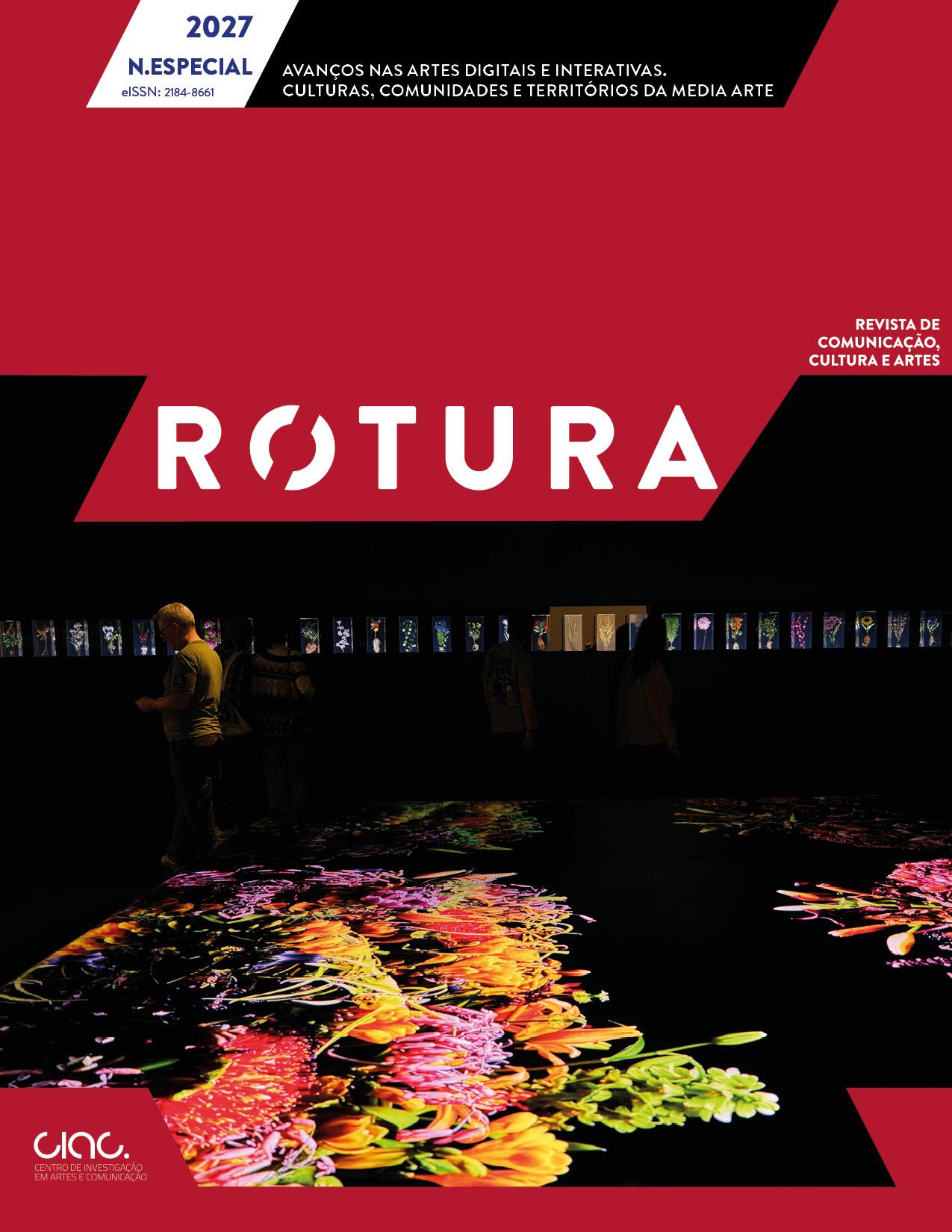
Special Issue: “Advances in Digital and Interactive Arts – Cultures, Communities and Territories of Media Art”
The journal ROTURA – Journal of Communication, Culture and the Arts invites submissions for the special issue “Advances in Digital and Interactive Arts – Cultures, Communities and Territories of Media Art”, edited in collaboration with the Doctoral School of the University of Saint Joseph, Macao/China, and the Communication and Society Research Centre (CECS) of the University of Minho, Braga, Portugal.
Digital and interactive arts have become a vital field of research, creation, and critical reflection, bringing together artistic practice, scientific research, technological experimentation, and cultural and communication studies. Contemporary digital culture increasingly emerges at the intersection of media art, interactive systems, artificial intelligence, immersive environments, generative processes, digital communities, and socially engaged creative practices.
This special issue aims to foster a deeper understanding of digital and interactive arts across a broad spectrum of cultural, disciplinary, and professional contexts. It welcomes contributions that examine how artistic creation and digital technologies shape new aesthetic experiences, cultural imaginaries, forms of participation, modes of authorship, and relationships between communities, territories, and media environments.
Submissions may address, but are not limited to, the following topics:
- AI, generative systems, and computational creativity, including generative and algorithmic art, creative coding, computational aesthetics, authorship, and parametric design.
- Interactive, immersive, tangible media, including interaction design, gesture, tangible interfaces, immersive and hybrid realities.
- Digital Art Cultures, Communities, and Territories, including web art,, digital culture; situated media practices, and local/global creative networks.
- Audio-Visual, Multimedia, Games and Storytelling, including electronic music, sound art, digital games, interactive narratives, and digital storytelling.
- Art, Science, Technology, and Sustainability, including art and science theory, sustainability, ecological media practices, bioremediation activism, and interdisciplinary research.
- Digital Preservation, Education, and Cultural Mediation, including media art history, archives, e-learning, STEAM, digital literacy, curatorial practices, and cultural memory.
- Artistic Research, Theory, and Practice-Based Methodologies, including creativity theory, praxis and poesis, critical reflection, artistic research methods, case studies, and practice-based approaches to digital and interactive arts.
Submissions must be made through the journal platform by 30 November 2026, in strict compliance with the submission guidelines of ROTURA.
Guest editors:
Alberto Sá, University of Minho, Portugal (https://www.cecs.uminho.pt/en/investigador/alberto-manuel-teixeira-de-sa/ | https://orcid.org/0000-0002-8367-9404)
Adérito Fernandes-Marcos, University of Saint Joseph, Macao/China (https://www.usj.edu.mo/en/faculty-directory/aderito-fernandes-marcos/ | https://orcid.org/0000-0002-9164-9686)
Timeline:
Deadline for submission: 30 November 2026
Notification of acceptance: 28 February 2027
Submission of final version: 31 March 2027
Publication: 30 April 2027
Reconfiguring Musical Performance in the Age of New Media
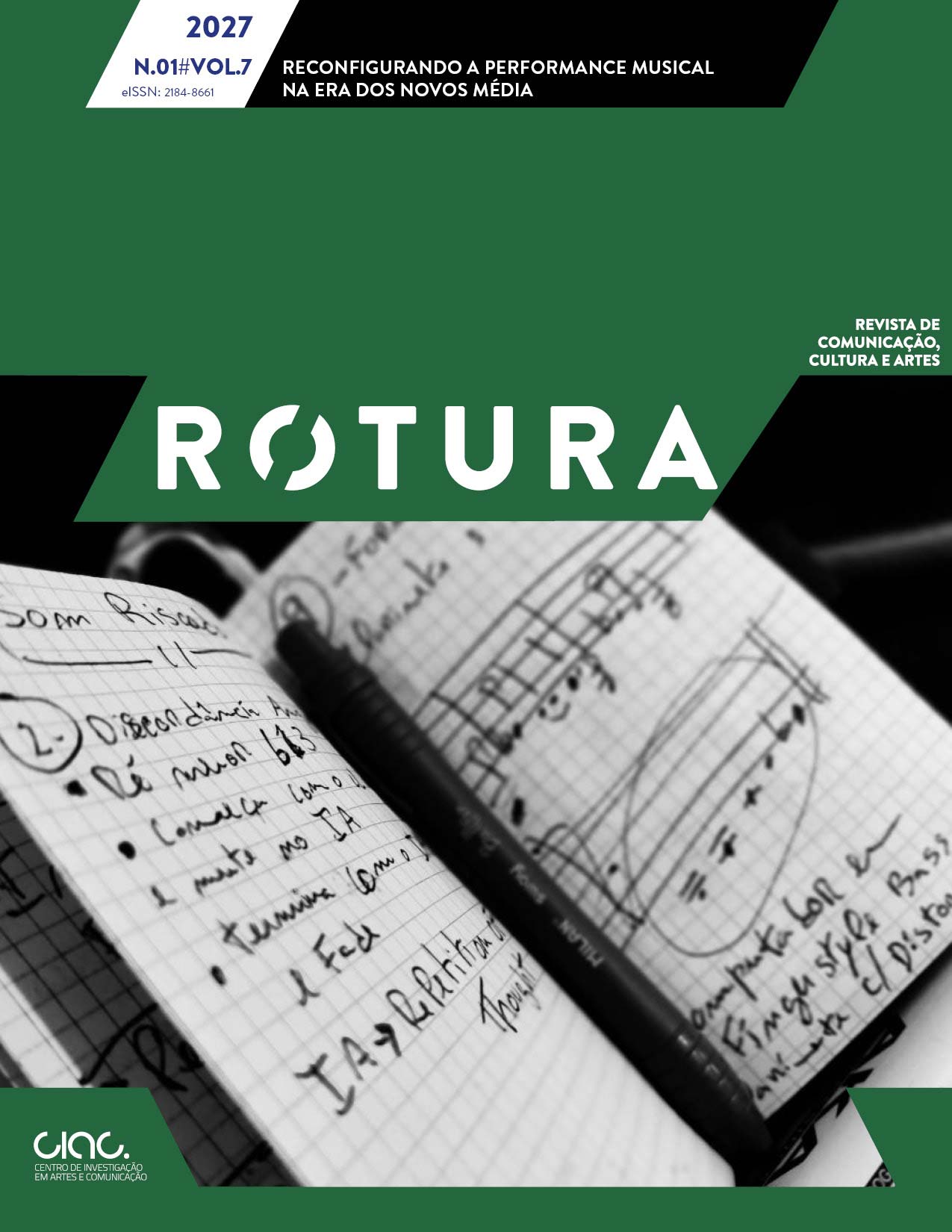
This issue aims to examine the impact of new media art practices on musical performance among classically trained instrumentalists. It seeks to explore how these practices are reshaping performers’ roles and identities, shifting them from interpreters to hybrid creators engaged with interactivity, algorithms, and generative systems. Rather than solely reflecting on past developments, the issue foregrounds how performance operates within paradigms of co-agency in multimedia creation, where it is understood as a distributed process that reconfigures authorship and modes of agency.
In this context, co-agency refers to the dynamic and distributed interaction between human performers and technological systems, in which agency emerges relationally rather than residing exclusively in the performer.
Performance, particularly in the context of classically trained instrumentalists, is a complex physical and cognitive activity that integrates sound intention (musical intentions conveyed through the emphasis on structures, phrasing, and dynamics), rhythm (the temporal organisation of sound) and articulation (the shaping of sound through attack, duration, and release) (Laukka, 2004; Palmer, 1997). In the process of interpreting a score for an audience (Travasso & Gomes, 2021), this interplay between the physical and the cognitive operates in two complementary ways: (1) consciously planned and executed physical movements; and (2) movements emerging from embodied, often unconscious, practice routines (Nijs et al., 2013).
The score plays a central mediating role between composers and performers, generating interpretative possibilities and new artistic forms (Doyle & Toniutti, 2023; LaBelle, 2006). As argued by Cook (2014), the performance of written Western classical music reflects the interpretative choices of performers, shaped by both their creativity and their knowledge of musical culture. In this sense, instrumental performance can be understood as comprising two interrelated dimensions: the acquisition of technical skills enabling musical interpretation, and the application of cultural and stylistic knowledge to structure and shape that interpretation. Together, these dimensions give rise to the performative realisation of the score.
Another defining characteristic of musical performance is its intricate relationship with technology. The continuous evolution of musical instruments, alongside shifting performative demands, has long required instrumentalists to adapt and expand their practice (Magnusson, 2019). Within the broader context of the digital and information revolution, contemporary performers are confronted with new technical, technological, and aesthetic challenges (Castilho et al., 2021; Ferguson & Brown, 2016). This evolving landscape places increasing pressure on performers to acquire new competencies and to redefine their role. Today’s instrumentalists operate within a complex environment in which traditional musical skills are intertwined with technological proficiency and experimental artistic practices, giving rise to what may be described as the “post-performer”.
This expanded role encompasses not only interpretation but also sound design, composition, and real-time interaction with digital systems. As such, contemporary instrumentalists are required to adopt a multifaceted approach, in which technology extends the physicality of the body and reconfigures the boundaries of musical practice and artistic expression.
In summary, these perspectives highlight the profound and multifaceted impact of technology on musical performance, offering critical insights into the evolving identities and practices of contemporary musicians within new media art contexts.
TOPICS OF INTEREST
We welcome submissions including, but not limited to, the following topics:
- Post-performer paradigms and hybrid artistic identities
- Co-agency, distributed authorship, and human–machine interaction in performance
- New media art practices in instrumental music performance
- Instrumental performance and generative / algorithmic systems
- Real-time interaction, live electronics, and augmented instruments
- Embodiment, gesture, and extended instrumental techniques in technological contexts
- The role of the score in technologically mediated performance
- Sound design and composition within instrumental practice
- Performance as a site of research in artistic and practice-based methodologies
- Post-digital aesthetics and experimental performance practices
- Artificial intelligence and machine learning in musical performance
- Expanded listening and new modes of audience engagement
Deadline for paper submission: September 30, 2026
Notification of acceptance: November 15, 2026
Final version submission: December 31, 2026
Publication: February 28, 2027
References
Castilho, L., Dias, R., & Pinho, J. (2021). Perspectives on Music, Sound and Musicology: Research, Education and Practice. Springer. https://doi.org/https://doi.org/10.1007/978-3-030-78451-5
Cook, N. (2014). Between art and science: Music as performance. J. Br. Acad., 2(March), 1–25. https://doi.org/10.5871/jba/002.001
Doyle, K., & Toniutti, A. (2023). Problem as Possibility: A Dialogue about Performance and Analysis with Lucia Dlugoszewski’s Experimental Notation as Case Study. In Contemporary Music Review (Vol. 42, Issue 1, pp. 100–113). https://doi.org/10.1080/07494467.2023.2193090
Ferguson, J. R., & Brown, A. R. (2016). Fostering a Post-Digital Avant-Garde: Research-led teaching of music technology. Organised Sound, 21(2), 127–137. https://doi.org/10.1017/S1355771816000054
LaBelle, B. (2006). Background Noise: Perspectives On Sound Art. Continuum.
Laukka, P. (2004). Instrumental music teachers’ views on expressivity: a report from music conservatoires. Music Education Research, 6(1), 45–56. https://doi.org/10.1080/1461380032000182821
Magnusson, T. (2019). Sonic Writing, technologies of material, symbolic & signal inscriptions. In Boomsbury Acad. https://doi.org/10.5040/9781501313899
Nijs, L., Lesaffre, M., & Leman, M. (2013). The musical instrument as a natural extension of the musician. In M. Castellengo, H. Genevois, & J.-M. Bardez (Eds.), Music and its instruments (pp. 467–484). Editions Delatour France.
Palmer, C. (1997). Music Performance. Annual Review of Psychology, 48(1), 115–138. https://doi.org/https://doi.org/10.1146/annurev.psych.48.1.115
Travasso, R., & Gomes, J. A. (2021). Evolving Instrumentalist - a continuous trajectory. In I. Guerrero & D. Galindo (Eds.), I Congreso Internacional “Intersección: arte, sociedad y tecnología en la innovación musical" (pp. 186–191). Procompal Publicaciones.
Mediterranean Film Studios
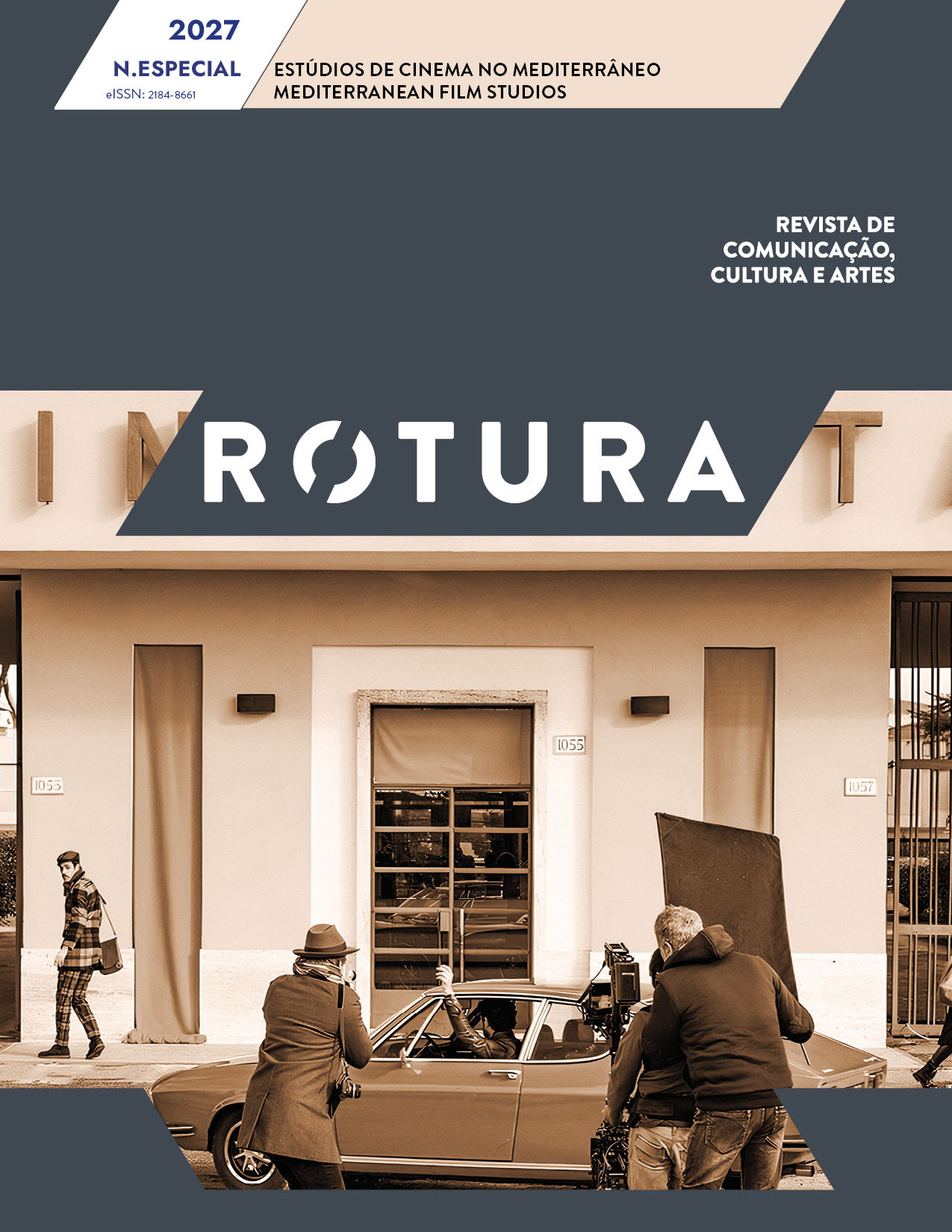
Film studios have been central in the history of audio-visual media production since the early 20th century, from the early glasshouses to the massive studio lots in Hollywood and elsewhere. Studios exude an impression of glamour and mystery, which has turned many of them into tourist attractions. Yet in film studies, the focus of attention has mostly been on the interpretation of films, on the trajectory of directors, producers, stars, or on the study of audiences and exhibition sites. In those studies where studios feature, they are often amalgamated into the story of production companies, as necessary tools to achieve financial targets, rather than as specific sites worth of study in their own right.
Studios are laboratories of innovation and creativity. They are physical structures that reflect their function, but which also mediate architectural and wider cultural trends. They are work environments structured around specific conventions, rules, policies and collaborative practices, and they can be seen as microcosms of wider social and political developments. It is this multifaceted nature of film studios that has recently begun to be rediscovered by scholars, especially in the work by Brian Jacobson (2015 and 2020) and Street et al. (2026).
While the history of the major Hollywood studios has been relatively well documented, there is, with few exceptions (e.g. García de Dueñas and Gorostiza, 2001, Street 2024), comparatively little work on studios elsewhere. Street et al have mapped the studio histories of Britain, France, Germany, and Italy from the early sound period to the late 1950s, while stressing the interaction and transnational traffic between these countries. Jacobson’s anthology provides a broader range of case studies and periods, but in their distinct focus, they lack wider transnational contexts and interactions.
Recognizing the need to reconsider regional and transnational connections and networks, this CFP builds on these interventions and invites contributions that explore the histories of film studios in the Mediterranean space (Southern Europe, North Africa, the Levant), from the early days of cinema to the present, and their relations with each other. We are particularly interested in the following topics:
- Histories of individual studios
- Studios as symbols of national culture
- Transnational studio relations
- Studio architecture and design
- Afterlives of studios as heritage, tourist attractions, or real estate
- Working practices
- Technological changes
Bibliography
García de Dueñas, J., & Gorostiza, J. (2001). Los estudios cinematográficos españoles. Academia de las Artes y de las Ciencias Cinematográficas.
Jacobson, B. R. (2015). Studios before the system: Architecture, technology, and the emergence of cinematic space. Columbia University Press.
Jacobson, B. R. (Ed.). (2020). In the studio: Visual creation and its material environments. University of California Press.
Street, S. (2024). Pinewood: Anatomy of a film studio in post-war Britain. Springer.
Street, S., et al. (2026). Film studios in Britain, France, Germany and Italy: Architecture, innovation, labour, politics, 1930–60 (forthcoming). Bloomsbury.
Tim Bergfelder is Professor of Film Studies at the University of Southampton (UK). He is co-editor of the journal Screen, and series editor of Berghahn’s Film Europa book series, and of the Palgrave series European Film and Media Studies. He is co-author of the forthcoming book Film Studios in Britain, France, Germany and Italy. Architecture, Innovation, Labour, Politics, 1930–1960; London: BFI/Bloomsbury (2026). Previous publications as author, editor, and co-editor include “EXIL SHANGHAI as Audio-Visual Archive and Cross-Cultural Collage.” In: Angela McRobbie (ed.), Ulrike Ottinger. Film, Art and the Ethnographic Imagination (Bristol: Intellect 2024); The German Cinema Book (second edition, London; BFI 2020); “Popular European Cinema in the 2000s: Cinephilia, Genre and Heritage,” in Mary Harrod, Mariana Liz, and Alissa Timoshkina (eds.), The Europeanness of European Cinema. Identity, Meaning, Globalization, London and New York: I.B. Tauris 2015; Destination London: German-speaking émigrés and British Cinema, 1925–1950 (Oxford and New York: Berghahn 2008); Film Architecture and the Transnational Imagination: Set Design in 1930s European Cinema (Amsterdam: Amsterdam University Press 2007); International Adventures. Popular German Cinema and European Co-Productions in the 1960s (Oxford and New York: Berghahn 2005).
https://orcid.org/0000-0001-6585-6123
https://www.southampton.ac.uk/people/5wyk6m/professor-tim-bergfelder
Daniel Biltereyst is Full Professor of Film and Media Studies and Director of the Centre for Cinema and Media Studies (CIMS) at Ghent University. A specialist in film and media history, historical audiences, censorship, and media controversies, he is a central figure in the development of New Cinema History. He is an elected member of the Academia Europaea and co founder of the international HoMER network, dedicated to research on film exhibition, distribution, and reception. He also serves as a programmer for Film Plateau, the university film club he helped establish. Biltereyst has extensive experience on scientific and pedagogical evaluation committees across several countries and has secured both national and international research funding. He has supervised more than 25 doctoral projects and has published widely in leading academic journals, as well as co editing key volumes such as The Routledge Companion to New Cinema History, Mapping Movie Magazines, New Perspectives on Early Cinema History, Cinema in the Arab World, and The Screening Censorship Companion.
Jorge Manuel Neves Carrega is a full member of CIAC – Research Centre in Arts and Communication at the University of Algarve, where he has been teaching courses on cinema, arts, and communication since 2012. He currently coordinates the Film Studies Working Group at CIAC and organizes the Mediterranean Cinemas Colloquium. He is also vice-president of AIM – Association of Moving Image Researchers. He is currently investigating the history of film exhibition in the Algarve and coordinates the CURATE project, which studies the poster collection of the Municipal Museum of Faro.
Jorge Carrega is the author of seven books, including “Géneros Populares e Cinema Transnacional na Europa Mediterrânea” (CIAC, 2023), Elvis Presley e a Cultura Popular do séc. XX” (CIAC, 2023), and “Brief Cultural History of Faro” (UFF, 2018). He has published around fifty articles and book chapters in various academic publications.
https://orcid.org/0000-0002-0797-8891
https://www.cienciavitae.pt//1C18-48AC-ECE7
Mélisande Leventopoulos is an associate professor at the University of Paris 8 Vincennes-Saint-Denis (France). A historian working on cinema, she completed a doctoral thesis on Catholics and cinema in France (2013) after which she gradually shifted her research focus to the Balkans and the Eastern Mediterranean. She co-led the global history project “Community Building at the Cinema” with Morgan Corriou and Caroline Damiens (2021-2023) and currently runs the project “Visual Salonica”, on Thessaloniki’s visual history, in collaboration with Nefeli Liontou (2021-2026). She has contributed to several international edited collections in the field of cinema history and published in journals such as Film History and 1895 Revue d’histoire du cinéma.
melisande.leventopoulos@gmail.com
melisande.leventopoulos02@univ-paris8.fr
Deadline for submission of papers: 02-27-2027
Acceptance notification: 04-30-2027
Submission of final version: 05-29-2027
Publication: 07-30-2027
Visual Methods for Exploring Communication through Creative and Multimodal Perspectives
Visual methods offer an alternative way to explore reality from a visually mediated perspective, aiming to transcend the boundaries and disciplinary specificity that often constrain the creative potential of the social sciences. There is a general consensus in understanding visual methods as those that incorporate visual creation into the research process, although their scope goes beyond this. Multimodal media practices, sensory approaches, and participatory or collaborative methods shape this flexible and constantly evolving field, which is characterized by its capacity to make sense of audiovisual representations and creations within the research process itself (Pink, 2009; Bouldoires et al., 2017; Yvart et al., 2023). This movement is notable for its independent, interdisciplinary, and even “un-disciplinary” nature. Bodily and subjective relationships (Ruby, 2000; MacDougall, 1995) that shape the visual experience and construct representation exemplify the multiple ambitions of these methods, which require a deeper reflection on the data they generate – an aspect that is not always sufficiently considered (Buckingham, 2009; Switzer, 2018). Approaches such as those of Cruz, Sumartojo and Pink (2017) and Ibanez-Bueno and Marín (2021) focus on new processes, digital tools, and emerging forms of scientific writing to explore their potential. These proposals allow for the conceptualization of integrated forms of knowledge production and presentation, such as web documentaries, transmedia narratives, or 360º immersive environments, which expand the traditional ways of communicating research outcomes.
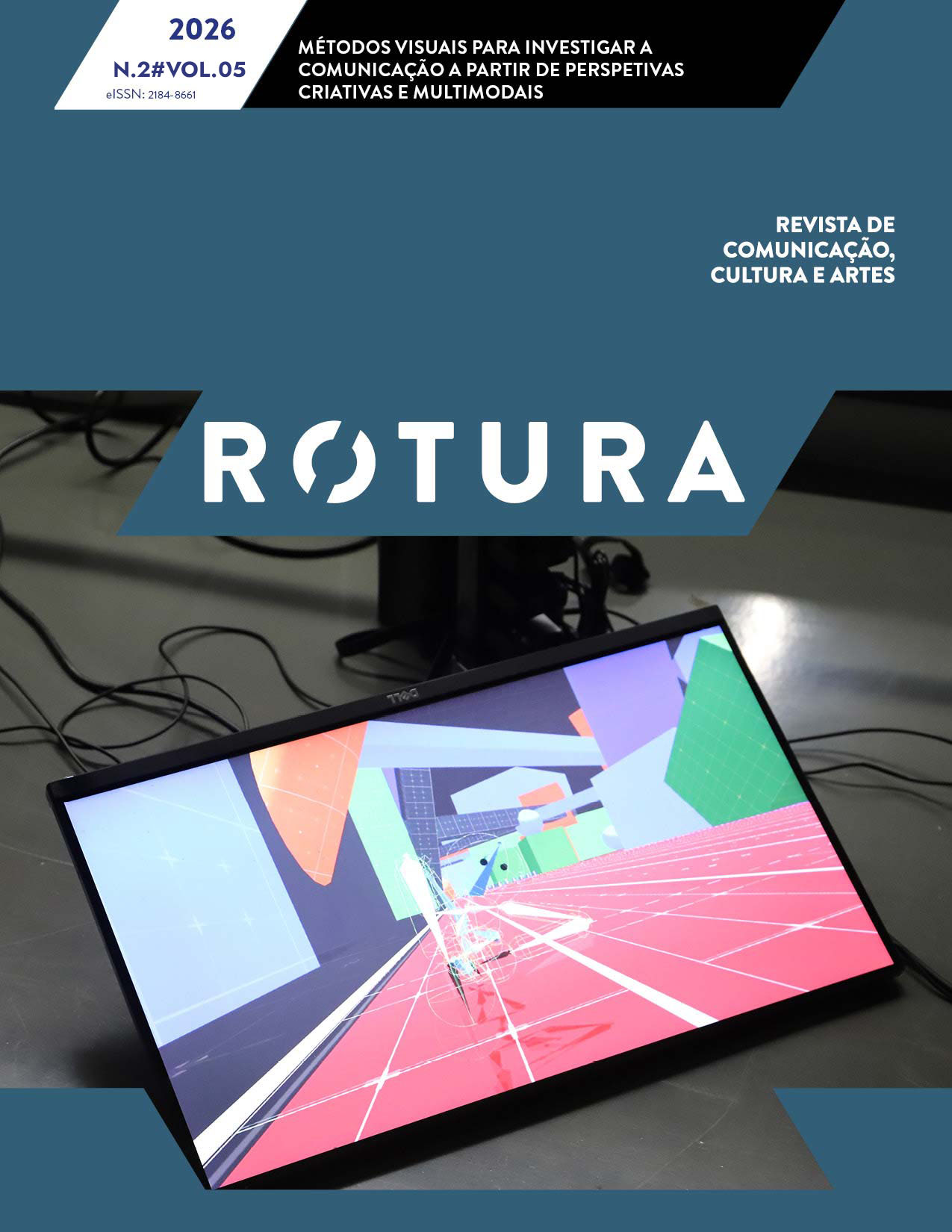
Cover Image: "Artificial Life: One Lag at a Time" Installation, by Ary-Yue Huang and Varvara Guljajeva (ARTECH 2023 - Faro)
POSSIBLE TOPICS
We invite the submission of both empirical and theoretical articles that reflect on visual research methods.
- Visual methodologies and emerging technologies
- Vision and artificial intelligence in visual research methodologies
- Intersections between visual methods and research-creation practices
- Critical studies on interpretative ethics in visual research processes
- Visual scientific creation and aesthetics: post-documentary, immersive, interactive, or transmedia
- Cases and digital visual restitutions in research
- Epistemology and studies on algorithmic visuality
- Analysis of algorithmic visual policies in the recognition of scopic regimes
KEY DATES
Deadline for submission of proposals: February 27, 2026
Notification of acceptance: May 15, 2026
Submission of final version: May 29, 2026
Publication: September 30, 2026
GUEST EDITORS
Alba Marín Carrillo. Universidad de Extremadura (España)
albamarin@unex.es
https://scholar.google.es/citations?user=M-WRiv8AAAAJ&hl=es
https://orcid.org/0000-0003-0285-7086
Charles-Alexandre Delestage. Université Bordeaux Montaigne (Francia)
charles-alexandre.delestage@u-bordeaux-montaigne.fr
https://scholar.google.es/citations?user=UCkwGAUAAAAJ&hl=es&oi=ao
https://orcid.org/0000-0002-7842-049X
Fernando Contreras Medina. Universidad de Sevilla (España)
fmedina@ues.es
https://scholar.google.es/citations?user=HtUZNuYAAAAJ&hl=es
https://orcid.org/0000-0003-1105-5800
Ricardo Ignacio Prado Hurtado. Universidad Anáhuac (México)
r.prado@anahuac.mx
https://scholar.google.es/citations?user=WPoUKnEAAAAJ&hl=es&oi=ao
https://orcid.org/0000-0002-4502-428X
Alba Marín. Assistant Professor at the University of Extremadura (Department of Audiovisual Communication and Advertising). She has been a postdoctoral researcher at the University of Seville (NextGenerationEU) and held a teaching and research position (ATER – equivalent to a junior lecturer) in the Department of Communication Hypermédia at Université Savoie Mont Blanc. She holds an international PhD in Communication from Université Grenoble Alpes / USMB and the University of Seville. Maître de Conférences in Information and Communication Sciences (section 71) and member of the research groups SEJ003: AR-CO (Communication Area) and HUM868: Visual Studies, Art, and Cultural Heritage. Her work explores the social significance of the image, media activism, and social documentary within the framework of Visual Studies and Visual Methods.
Charles Alexandre Delestage. Associate Professor in Information and Communication Sciences in the Métiers du Multimédia et de l’Internet (MMI) department and member of the MICA research laboratory at Université Bordeaux Montaigne (France). He holds a PhD in Information and Communication from Université Polytechnique Hauts-de-France. He teaches audiovisual communication and immersive media production. His work focuses on the use of visual methods to subjectively collect data on individual emotional experience (development of Spot Your Mood) and on the reception of immersive technologies in culture.
Fernando Contreras Medina. Full Professor in the Department of Journalism I at the University of Seville, where he teaches Cyberculture, Design, and Visual Studies. He is the author of El cibermundo. Dialéctica del discurso informático (1998), one of the first narrative studies on video games in Spain. His most recent publications include Estudios Visuales en Brasil (2022), El arte en la cibercultura. Introducción a una estética comunicacional (2018), and La desobediencia visual. Estética de los movimientos sociales del siglo XXI (2021).
Ricardo Ignacio Prado Hurtado. Professor and researcher, as well as graduate program coordinator at the Center for Research in Applied Communication (CICA) at Universidad Anáhuac México. Executive Director of Mostrotown Publicidad. He holds a PhD in Communication Research from Universidad Anáhuac México and a PhD in Information and Communication Sciences from Université Savoie Mont Blanc, where he also serves as an associate researcher at the LLSETI laboratory. His work focuses on Emerging Research Methods (ERM), advertising and countermarketing studies, as well as food studies and communication for nutritional health.
References
Bouldoires, A., Reix, F. y Meyer, M. (2017). Méthodes visuelles : définition et enjeux. Revue Française des Méthodes Visuelles, no 1 (juillet). https://rfmv.fr/numeros/1/introduction/.
Ibanez-Bueno, J., y Marín, A. (2021). Images interactives et nouvelles écritures. Un mouvement émergent pour de nouvelles écritures interactives. Revue française des méthodes visuelles, (5). https://doi.org/10.4000/12mp0
Buckingham, D. (2009). `Creative’ Visual Methods in Media Research: Possibilities, Problems and Proposals. Media, Culture & Society, 31(4): 633-52. https://doi.org/10.1177/0163443709335280.
Contreras, F.R. y Marín, A. (2022). Estudios Visuales en Brasil. Tirant lo Blanc.
Cruz, E. G., Sumartojo, S. y Pink, S. (2017). Refiguring Techniques in Digital Visual Research. Springer.
McDougall, D. (1995). Beyond observational cinema. In P. Hockings (ed.), Principles of Visual Anthropology. Mouton de Gruyter.
Pauwels, L. (2010). Taking the visual turn in research and scholarly communication key issues in developing a more visually literate (social) science. Visual Sociology, 15(1): 7-14. https://doi.org/10.1080/14725860008583812.
Pink, S. (2009). Doing Sensory Ethnography. Sage.
Ruby, J (2000). Picturing culture: explorations of film and anthropology. The University of Chicago Press.
Switzer, S. (2018). «That’s in an Image?: Towards a Critical and Interdisciplinary Reading of Participatory Visual Methods». En Moshoula Capous-Desyllas y Karen Morgaine (Eds.), Creating Social Change Through Creativity, pp. 189-207. Springer International Publishing. https://doi.org/10.1007/978-3-319-52129-9_11.
Yvart, W., Delestage, C.A. y Lamboux-Durand, A. (2023). Les contours des méthodes visuelles. In III Conference on Visual and Multimodal Methods, Universidad de La Laguna, Tenerife, Espagne.
Digital Artivism – Intersections of Art, Activism, and Social Transformation
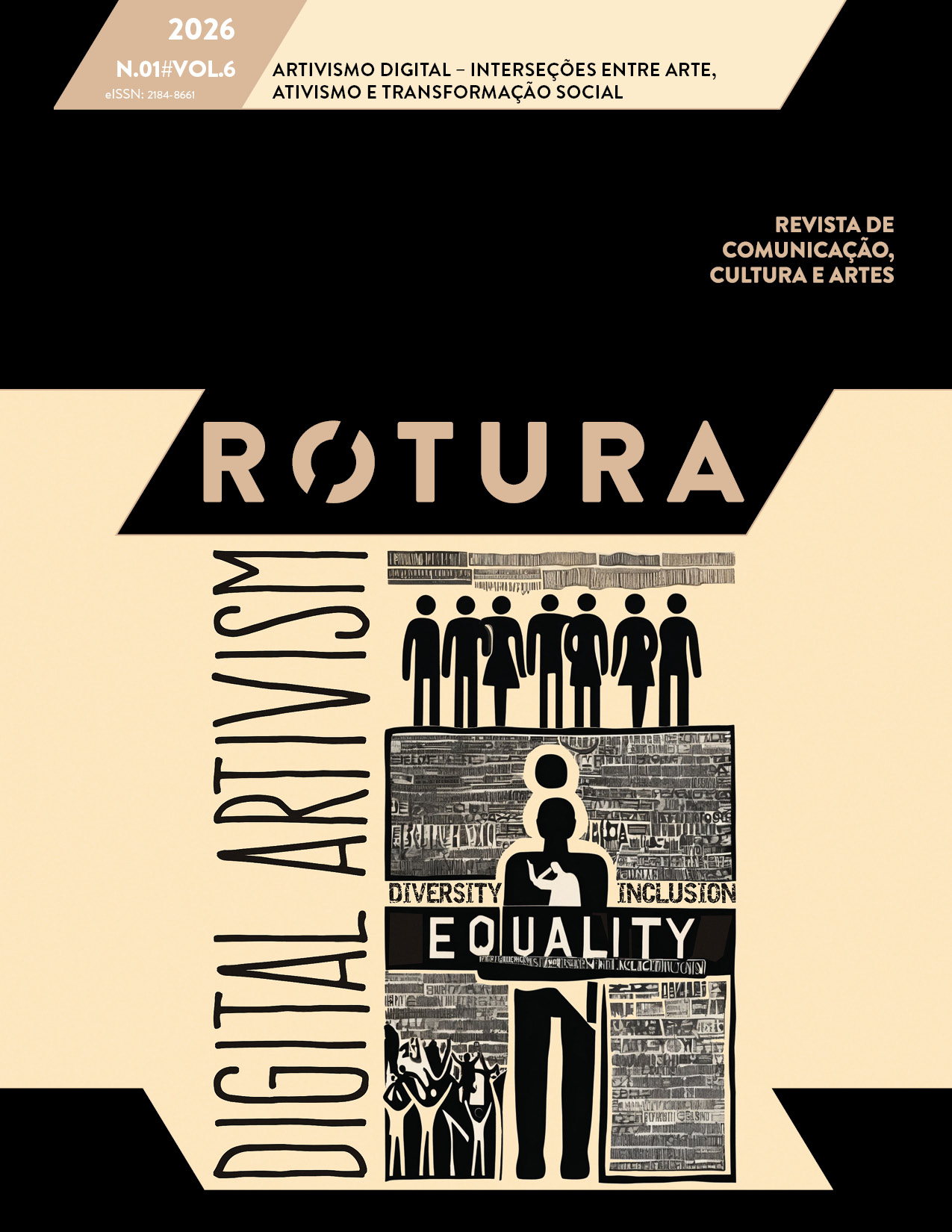
In an era defined by digital saturation, ubiquitous connectivity, algorithmic control, and global information flows, Digital Artivism has emerged as a powerful mode of creative resistance. It operates at the intersection of artistic innovation and political intervention, using digital tools, platforms, and aesthetics to question dominant narratives, expose injustices, and mobilize communities toward social transformation. The rapid expansion of social media and digital sharing has reshaped the terrain of activism. From the immediacy of viral memes that satirize political leaders to the proliferation of subvertising—the appropriation and alteration of corporate advertising to reveal underlying exploitative ideologies—Digital Artivism thrives on remix, visibility, and disruption. Activists have created GIF campaigns, interactive web art, AI-generated counter-narratives, and augmented reality interventions that critically engage with public space, class and identity politics, climate urgency, and surveillance culture. More radical – and often illegal – forms, such as hacktivism, challenge institutions through direct digital action, ranging from website defacements and data leaks to tactical disruptions of state and corporate infrastructures. Projects like Anonymous' online operations, the hijinks of The Yes Men, or the politically charged artistic hacks of collectives like !Mediengruppe Bitnik exemplify how digital tools can be weaponised aesthetically and politically to demand transparency and accountability. Digital Artivism also appears in generative art practices that use algorithmic systems to critique bias in data, in net art collectives that design platforms for anonymous protest, or in extended reality (XR) performances that reimagine histories and possible futures of resistance. What unites these varied forms is their ability to provoke critical reflection while engaging publics through visual culture, digital literacy, and networked participation. As such, Digital Artivism is not only a method of intervention but also a medium of storytelling, community-building, and imagining alternatives.
We invite contributions that engage with the theoretical, historical, methodological, and practical dimensions of Digital Artivism, particularly those that examine its transformative potential in today’s media-saturated societies. We welcome diverse formats of previously unpublished materials, including research articles, practice-based reflections, case studies, and interdisciplinary analyses. Submissions should offer original insights into the transformative potential of digital creative practices at the intersection of art and activism. Submissions may address, but are not limited to, the following themes:
1. Histories and Genealogies of Digital Artivism
We encourage contributions that contextualise the origins, trajectories, and evolutions of Digital Artivism within broader narratives of political resistance, artistic innovation, and technological development.
2. Theoretical and Conceptual Frameworks
Contributions in this category may engage with conceptual debates surrounding Digital Artivism, including practices of appropriation, remix culture, subvertising, culture jamming, hacktivism, tactical media, and other forms of hybrid activist-artistic intervention.
3. Critical Pedagogies and Inclusive Digital Art Forms
This theme focuses on the intersection between artivist practices and critical pedagogy. We seek analyses of how relational aesthetics, socially transformative artistic approaches, and interventional digital art practices operate within educational settings to promote critical thinking and social awareness.
4. Digital Artivism and Community Co-construction
We invite explorations of how Digital Artivism contributes to the (co)(re)construction of community and minority identities, particularly in response to systemic social, political, or cultural marginalization. Emphasis should be placed on practices that foreground human rights, collective agency, and cultural resilience.
5. Digital Artivism and the UN 2030 Agenda for Sustainable Development
Calling for reflections on the role of Digital Artivism in advancing the Sustainable Development Goals (SDGs), especially concerning environmental justice, climate action, and the advocacy of sustainable ecosystems through creative practice.
6. Methodologies of Practice and Participation
We encourage submissions that examine methodological frameworks within Digital Artivism, particularly those that activate participatory and co-creative processes. Case studies and practice-led research exploring how artivist strategies foster civic engagement are welcome.
7. Between Political Art and Activist Art
We seek critical reflections on the conceptual and practical distinctions between political art and activist art, considering their respective goals, audiences, modes of intervention, and sociopolitical impact.
Important dates:
Deadline for submissions: 2025-09-30
Notification of acceptance: 2025-11-15
Final version submission: 2025-12-31
Publication: 2026-02-01
Editors: Isabel Cristina Carvalho (CIAC, Universidade Aberta), Marc Garrett (Furtherfield, Ravensbourne College of Design and Communication) and Pedro Alves da Veiga (CIAC, Universidade Aberta).
Isabel Carvalho is an artist and researcher with a background in Architecture and a PhD in Digital Media Art (2016), focusing on locative media and urban flows. She was a postdoctoral researcher in Computer Animation at Bournemouth University (2018–2019). Currently, she is a researcher at CIAC, Aberta University, where she studies community and collaborative mapping processes, and the interaction between people, spaces and technology, focusing on the interplay between real and virtual in hybrid urban experiences through locative media art.
Marc Garrett is an artist, writer, activist, and curator. He co-founded the Internet arts collective Furtherfield with Ruth Catlow in 1996, and has co-directed its Gallery and Lab in Finsbury Park, London, since 2004. He has co-curated numerous media art exhibitions and publications, including Artists Re: Thinking the Blockchain (2017) and Frankenstein Reanimated (2022). His biopolitical biography Feral Class will be published in summer 2025, followed by 30 Years of Furtherfield (autumn 2025), co-edited with Regine DeBatty and Martin Zellinger.
Pedro Alves da Veiga is currently a Professor and the Sub-Director of the PhD program in Digital Media Art at Aberta University in Portugal. His research bridges the fields of art, science, technology, and society, focusing on the impact of attention and experience economies on new media art ecosystems, new media curatorship, and arts-based and practice-based research methodologies. As an artivist, Veiga explores generative art, interactive systems, creative programming, assemblage, and digital audiovisuals.
Call for papers (permanently)
- Varia (different articles from the dossier);
- Reviews and Interviews;
- Art Chronicle.